About
There's a gap between how your life looks and how your life feels.
I help people close it.
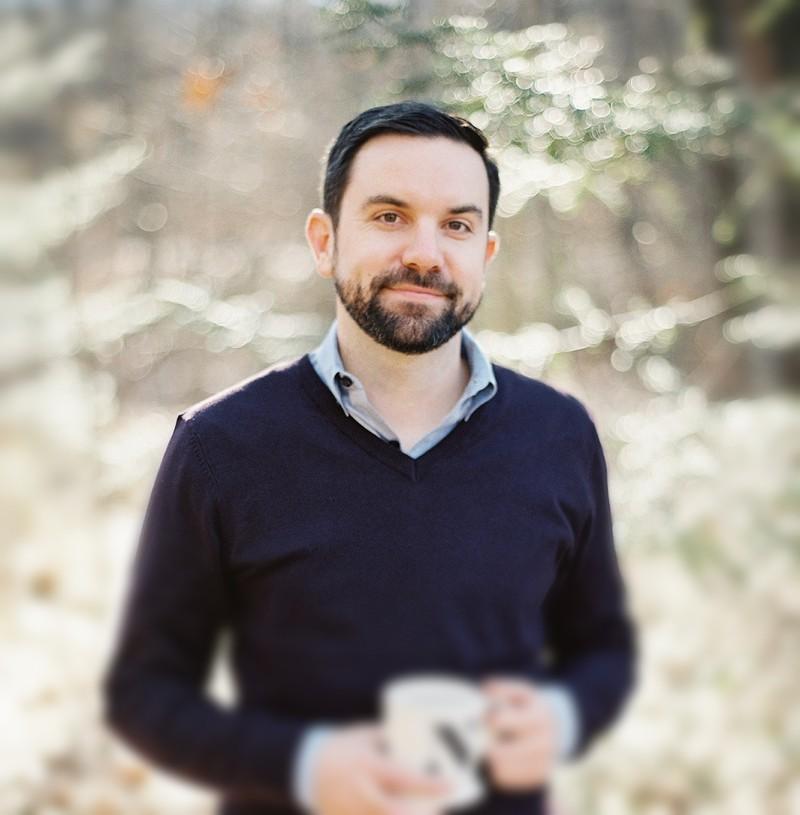
Dr. Nathan Sharer
Licensed Clinical Psychologist
PsyD, Clinical Psychology — Marshall University
Ed.S. & M.A., Counseling Psychology — James Madison University
MD #05464
NY #026771
PSYPACT #11731
16+ years in practice · Verified by Psychology Today
Sixteen years in, I'm still most interested in the clients who almost didn't reach out.
The ones who have “been thinking about this for a long time” or say “I wasn't sure if this is something you could work on in therapy.” The people who have browsed Psychology Today, nearly filled out a consultation form, and then closed the browser because they were either unsure if it could actually help.
Those are my people.
Successful doesn't always mean fulfilled. It often means you've gotten very good at making hard things look manageable. Eventually the gap between performance and reality gets exhausting. Most of my clients have been carrying it for years before they find their way to our work.
Why this work
I got into psychology because I've always been interested in how people understand themselves and how rarely we give ourselves the same curiosity we'd give anyone else. I'm fascinated by the intersection of our biology (our brain, our genetics) and our environment (what happens to us, who we meet, being lucky or unlucky).
Early on, I worked with a wide range of presenting concerns: anxiety, depression, trauma, relationship conflict, identity questions, career transitions. I was trained as a student clinician with a focus on PTSD at multiple Veterans Affairs placements in rural West Virginia and Kentucky. I have trained and worked at multiple university counseling centers, including Towson University where I completed my internship and had my first job as a Staff Psychologist. There, I received more training as a generalist and sharpened my overall clinical skills.
I started my private practice in 2014 and continued working as a generalist. However, over time, a pattern emerged. I started to find that the clients I connected with the most — and the ones that found their way to me most often through word of mouth — were capable, often high-achieving people doing well by every external measure, and struggling to understand why it all felt so hard.
So that's where I've stayed and that's broadly the lane I still occupy today as my practice has matured.
Research background
My doctoral dissertation examined social anxiety and depression among adults who were heavy online gamers. This was a population that was, at the time, mostly misunderstood. What the research kept showing was that the “addictive behavior” people called the problem was usually a symptom of something else: neurodiversity, avoidance, and anxiety that hadn't found another outlet.
The presenting issue is rarely the whole story. That framing has stayed with me. It shapes how I approach assessment, how I listen in sessions, and how I think about what clients need versus what they say they want.
Why telehealth — by choice
I started doing telehealth out of necessity. Then something happened: it worked…really well. Surprisingly, I found that it was working well not in spite of the distance but often because of it.
Clients showed up more consistently. They had access from wherever made sense for their day — office, home, parked car, wherever. The hour they weren't spending in traffic went back to them. And the work didn't suffer. In many cases it deepened.
I do miss that office in Fells Point. What I don't miss: getting stuck in traffic on the JFX, waiting rooms lacking privacy, and the logistics that got in the way of the actual work.
How I work
My sessions are structured enough that we make real progress, and flexible enough that we can follow what's actually happening.
We start by understanding where you are relative to where you want to be. We figure out how your brain actually works. We examine what helps, what gets in the way, what you've been misreading as a character flaw for the last ten or twenty years (or more). Then we build strategies that fit the way you actually operate.
I use cognitive and behavioral approaches, mindfulness when it's useful, and the Gottman method for couples' work. I care a lot about momentum. Many of my clients stay for years. Not because nothing is changing, but because there's always more to work on and the work keeps being useful.
I think I'm funny, but you can be the judge of that.
Who I work with
I work with adults who are professionals, partners, students, artists, athletes, doctors, executives, or parents dealing with some version of: ADHD (diagnosed or suspected), anxiety, burnout, executive function challenges, relationship strain, or the specific exhaustion of building a life that looks successful but doesn't quite fit right.
Who I'm not the right fit for
I don't do crisis intervention or acute psychiatric work. I am a solo practitioner in my practice so I'm not built to provide the level of support required for effective care. If that's where you are, I'll help connect you with someone who's right for that.
I'm also not the right therapist for someone who wants a passive, largely reflective experience. My sessions move. We'll have structure, goals, and I'll ask you to try things between sessions.
If that sounds like what you're looking for — let's talk.